




Key takeaways
- E-signature platforms handle PII, financial data, and legal agreements. A single breach can expose identities and trigger penalties.
- Enterprise buyers require SOC 2 Type II before onboarding any e-signature provider.
- Type II certifies controls worked consistently over six to twelve months. Type I only verifies controls existed on one day.
- Having a SOC 2 Type II report is not enough. Check audit scope, recency, criteria, exceptions, and subservice coverage.
- Docupilot holds SOC 2 Type II, ISO 27001, GDPR, CCPA, and HIPAA. It runs on AWS with encryption and 99.9%+ uptime.
Every time someone signs a document electronically, sensitive information passes through the platform handling that signature. Names, email addresses, legal agreements, financial details, and authentication records all flow through a system you may not have evaluated for security.
That risk is exactly why enterprise buyers treat compliance as non-negotiable. Since e-signature platforms are classified as critical vendors, procurement teams routinely reject providers who cannot present a SOC 2 Type II report during the RFP process. Deal approvals are delayed until SOC 2 compliance is verified.
According to KPMG, 73% of enterprise buyers now require SOC 2 Type II compliance before onboarding any SaaS vendor that touches sensitive data.
This is not a hypothetical scenario.
This guide breaks down what SOC 2 Type II actually is in the context of e-signatures, when it matters, how it differs from Type I, and what enterprise buyers look for in a report.
Before we get into how SOC 2 connects to e-signatures, let us start with what it actually is.
What Exactly Is SOC 2 Type II
SOC 2 Type II is an independent audit that reviews how a company protects its systems and data over an extended period of time. Auditors examine access controls, data protection measures, activity logs, and incident response processes to understand how the company safeguards sensitive data in daily operations.
The audit follows a framework called the Trust Services Criteria. With its main focus being security, it evaluates how companies protect data, manage access, maintain system reliability, and uphold process integrity, confidentiality, and privacy
For e-signature platforms, this matters in two specific ways.
First, security controls like encryption, role-based access, and session timeouts need to be practically enforced at all times, apart from just being described in a policy document.
SOC 2 Type II verifies that these controls are active and functioning throughout the audit period.
Second, e-signature platforms do not work alone. They connect with CRMs, cloud storage, identity providers, and other tools through APIs.
SOC 2 Type II certification evaluates whether the provider is securing not just the signing experience, but the entire ecosystem of connections around it
What Does a SOC 2 Type II Report Tell You
When an SOC 2 Type II audit is completed, the auditor produces a formal report.
The report covers the systems included in scope, the controls implemented, the audit period covered, testing performed by the auditor, and any exceptions identified during the review.
As you know by now, if your platform uses e-signatures, this report is mandatory. Enterprise buyers and procurement teams review whether your company has one before approving you as a vendor. The key areas they scrutinize are whether:
- The systems in scope actually include the e-signature workflow and document storage infrastructure
- The audit period is recent and covers a meaningful duration
- Any exceptions were flagged around data handling or access controls.
SOC 2 Type I vs SOC 2 Type II: What Is the Difference
SOC 2 audits come in two forms: Type I and Type II.
You may wonder why this is relevant when talking about e-signatures. Here is the short answer: the wrong type of certification can leave your contracts and signer data exposed without you ever knowing.
The core difference is timing. A Type I report evaluates whether an organization has the right security controls designed and in place at a single point in time.
For instance, when an auditor walks in on a particular day, are the right policies, encryption protocols, and access controls documented and implemented? If yes, the company passes. The company may have strong security every other day of the year, but the report can only speak for what the auditor observed during that one assessment.
It is like a restaurant health inspection. The inspector comes on a Tuesday, everything looks clean, and you pass. But the report cannot tell you whether the kitchen was clean on Monday or whether it will be clean on Wednesday. It only covers what was seen on that Tuesday.
A Type II report goes further. Instead of checking controls on one specific day, it evaluates whether those controls actually worked consistently over six to twelve months. The auditor reviews access logs, tests encryption protocols, examines authentication workflows, checks incident response records, and verifies that data handling procedures were followed every day throughout the audit window.
Now, here is the problem with Type I for e-signatures. A contract signed today could be enforced or legally challenged years from now. A Type I report only confirms that security existed on the day the auditor checked. It tells you nothing about the next day, the next month, or the next year. For documents that carry long-term legal weight, that gap is too big to ignore. That is why enterprise buyers almost always ask for Type II.
If you are evaluating an e-signature provider and they only have a Type I report, it is not necessarily a red flag. But it is worth asking why they have not completed a Type II. Most mature providers treat Type I as a stepping stone and move to Type II within the first year.
In summary,
5 Features to Look for When Evaluating an E-Signature Provider's SOC 2 Report
Just because a provider has a SOC 2 Type II report does not mean the report is good. Two providers can both have a report, but one might cover everything while the other might have gaps, old audit dates, or exceptions.
Here are the key areas to focus on when reviewing a provider's report.
- Audit Scope
Check whether the e-signature workflow is actually included in the audit. Some providers get a SOC 2 Type II report for their broader infrastructure but exclude the document signing, storage, and authentication systems from the scope. If the parts of the platform you rely on are not covered, the report does not protect you.
- Audit Recency
A SOC 2 Type II report is not evergreen. It covers a specific audit window. If the report is older than twelve months, the controls it verified may no longer reflect how the provider operates today.
Always ask for the most recent report and check the dates.
- Trust Service Criteria Covered
Security is mandatory in every SOC 2 audit, but the other four criteria: Availability, processing integrity, confidentiality, and privacy, are optional. For e-signature platforms that handle legally binding documents and personal data, you want to see confidentiality and privacy included at a minimum. If a provider only audited for security, question why the others were left out.
- Exceptions and Qualified Opinions
No audit is perfect, and finding exceptions in a report is not automatically a dealbreaker. What matters is whether the provider acknowledged them and took corrective action. If the exceptions relate to access controls, encryption, or data handling, and there is no documented remediation, that is a red flag.
- Subservice Organizations
E-signature platforms often rely on third-party services for cloud hosting, identity verification, or document storage. Check whether the report addresses these dependencies or excludes them. If critical parts of the signing workflow run through a subservice organization that is not covered by the audit, there is a gap in the assurance you are getting.
Now that you know what to look for, here is how one platform measures up.
How Docupilot Approaches E-Signature Compliance?
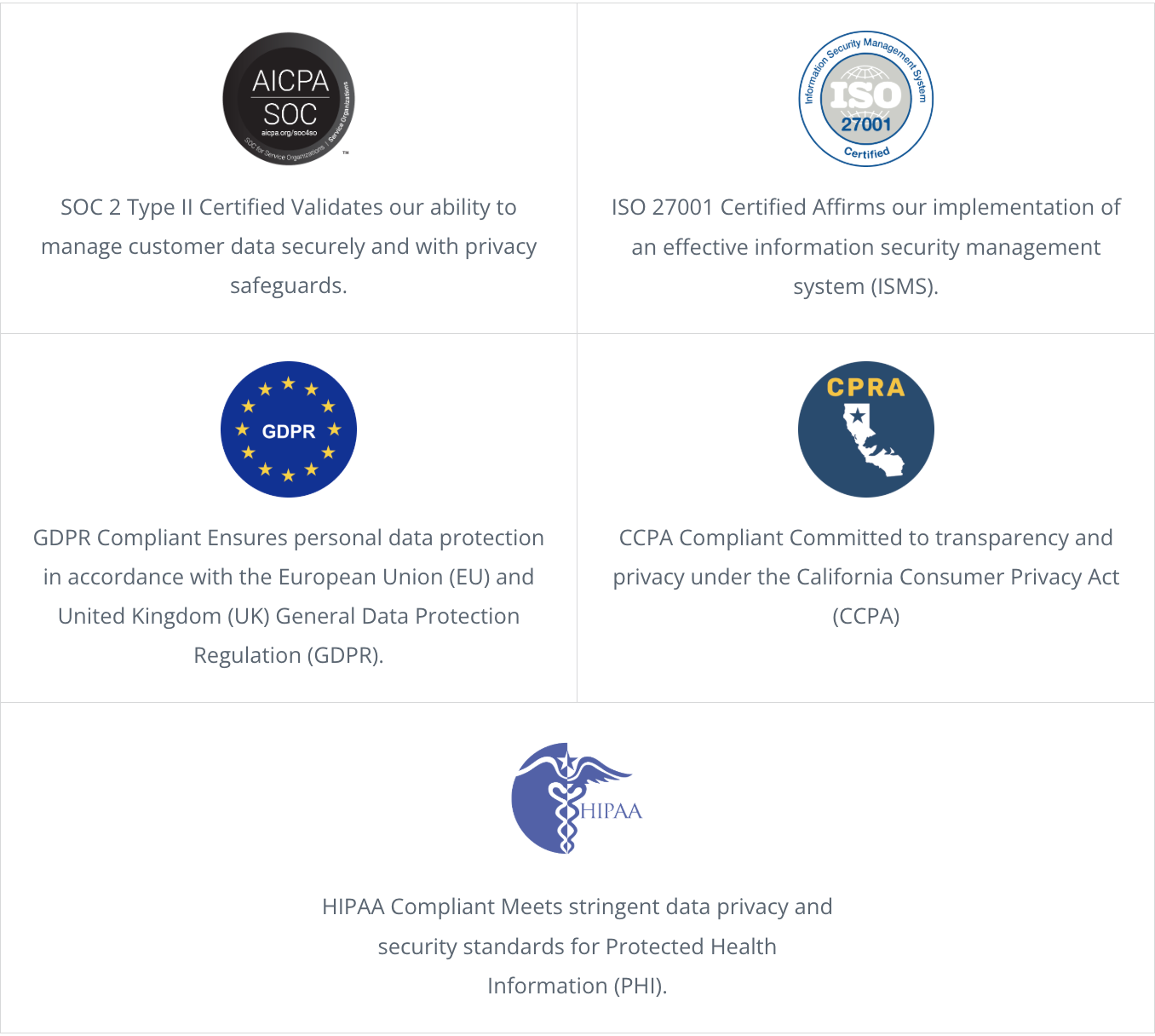
Docupilot is a document automation platform with built-in e-signature capabilities that comply with ESIGN and UETA regulations. It holds SOC 2 Type II certification alongside ISO 27001, GDPR, CCPA, and HIPAA compliance.
All data is encrypted in transit and at rest, the platform runs on AWS with built-in redundancy and continuous monitoring, and access is managed through role-based controls.
For enterprise buyers evaluating document automation and e-signature platforms, Docupilot checks the boxes that this entire article has outlined: a current SOC 2 Type II certification, strong encryption, infrastructure-level security, and compliance with major regulatory frameworks. If your team is looking for a provider where the compliance conversation does not become a blocker, this is a solid place to start.
Start your 14 day free trial with Docupilot and explore how SOC 2 Type II–aligned controls support enterprise approval.
FAQs
Is SOC 2 actually a certification?
Not in the traditional sense. SOC 2 is an attestation report issued by an independent CPA firm, not a formal certificate like ISO 27001. The industry commonly calls it a "certification," but what you actually receive from a provider is a detailed audit report.
How does SOC 2 fit into vendor due diligence for e-signatures?
It is one part of a broader evaluation. Enterprise buyers typically review security questionnaires, compliance certifications, data processing agreements, and the SOC 2 Type II report together. The SOC 2 report specifically answers whether a provider's security controls have been independently verified over time, something a self-reported questionnaire cannot do.
Can an e-signature be legally valid without SOC 2 compliance?
Yes. Legal validity is governed by laws like ESIGN and UETA, not SOC 2. However, SOC 2 addresses the security of the platform processing those signatures. Without it, you have a legally valid signature on a platform with no independent proof that it protects your data.
What if my current e-signature provider does not have SOC 2 Type II compliance?
It does not mean your signed documents are invalid, but it does mean there is no verification that the platform meets enterprise security standards. If compliance matters to your business or customers (and it should!), it may be time to evaluate providers that already hold the certification, like Docupilot.
What happens to my signed documents if my e-signature provider has a data breach?
The exposure goes beyond documents. Signer names, emails, IP addresses, authentication records, and agreement contents could all be compromised, potentially triggering regulatory penalties and breach notification obligations. A SOC 2 Type II certified provider reduces this risk because their controls have been independently verified over an extended period.
Learn how to automate document creation with Docupilot


Contents
Stop rebuilding the same document by hand.

Generate and sign in one workflow.
Fifteen minutes back, per application.