




Key takeaways
- Simplify school workflows with legally compliant e-signatures
- Digitize consent forms, admissions, and faculty contracts
- Ensure compliance and data protection with legally valid, auditable signatures
- Docupilot connects with 1000+ apps to automate your document processes
From consent forms to contracts, educational institutions juggle more documents than ever. Managing them manually is tedious, time-consuming, and prone to errors, which is completely out of sync with modern education systems.
Every signature that takes days to collect is another hour wasted in bureaucracy. In an era where efficiency and security are critical, there's a better way to manage it all.
That’s where electronic signatures for education step in. They help schools, colleges, and universities modernize approval processes, strengthen data protection and align with education-sector regulations. Let's explore how adopting an electronic signature for education can transform your administrative processes.
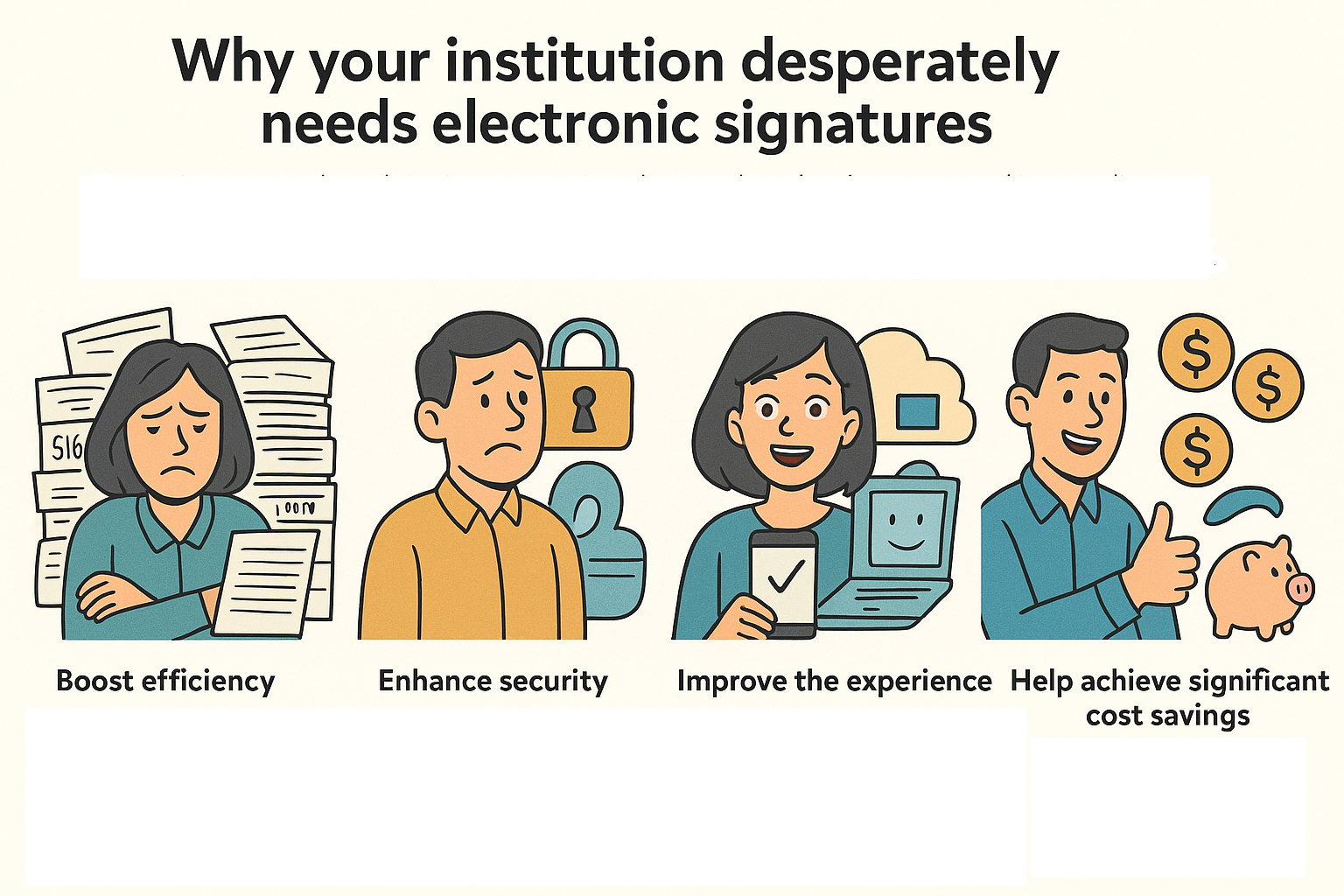
Why your institution desperately needs electronic signatures
Managing a paper-based signing process is tedious and often chaotic. Educational institutions routinely deal with hundreds of pending approvals, sensitive student data scattered across unsecured inboxes, and the constant scramble to track who signed what.
Even highly regulated government agencies are making the shift. Recently, the U.S. Social Security Administration announced the rollout of paperless transactions, underscoring a broader digital transformation in public services.
Electronic signatures flip that paperwork circus into a simple, well-orchestrated act. They:
- Boost efficiency: Electronic signature for education cut the time spent on printing, scanning, mailing, and chasing down signatures. What used to take days or weeks can now be completed in minutes, thus freeing up your valuable staff to focus on what truly matters: education
- Enhance security: Modern e-signature solutions offer robust audit trails, encryption, and authentication features. They help you keep compliant with global regulations like FERPA and GDPR
- Improve the experience: Qualified electronic signatures offer a modern, convenient way for students, parents, and staff to sign documents from anywhere, on any device
- Help achieve significant cost-savings: They reduce expenses related to paper, ink, postage, and physical storage
Benefits of digital signatures for educational institutions
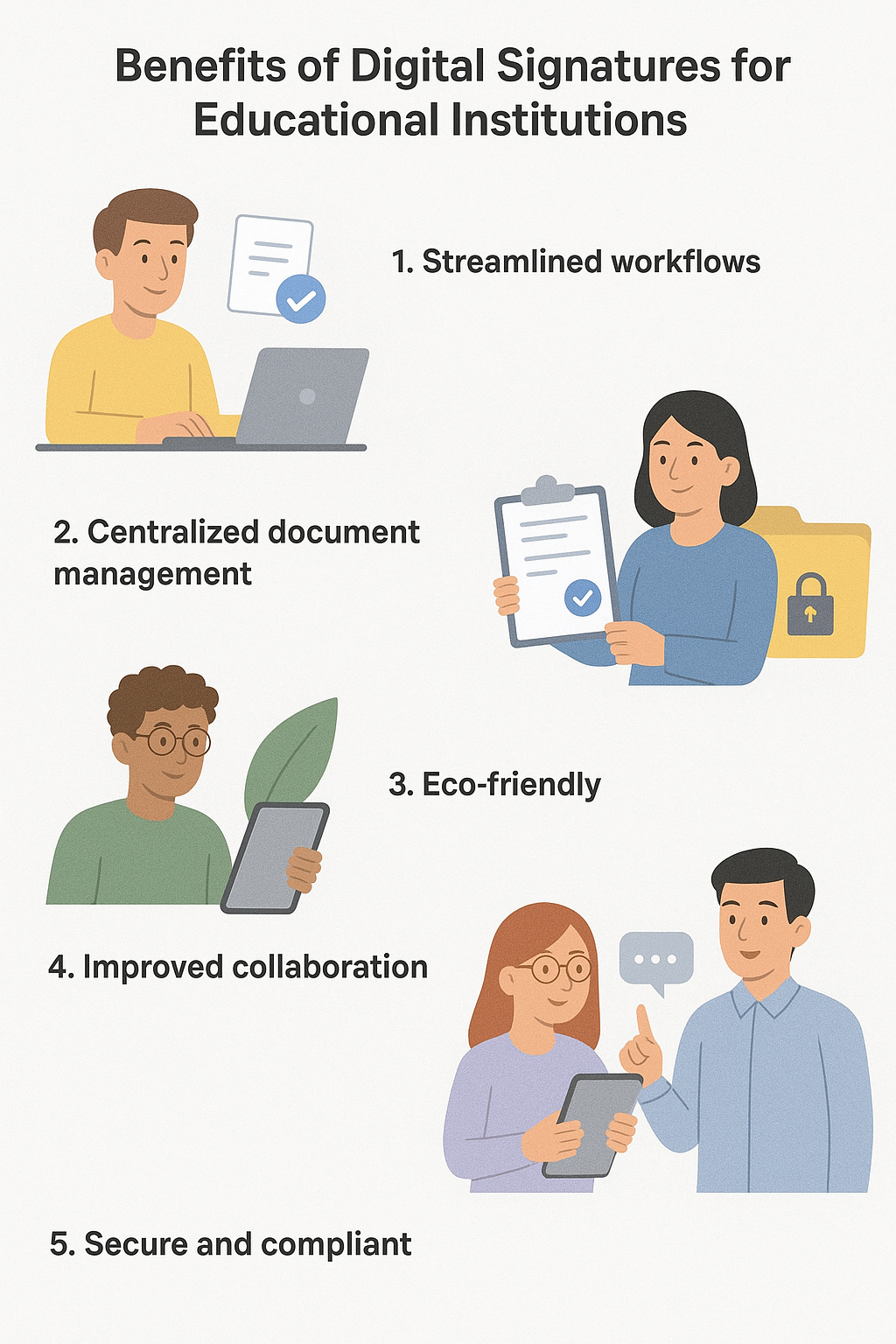
Here’s what happens when universities to K-12 schools replace manual signatures with a qualified electronic signature solution:
1. Streamlined workflows
Documents move automatically from sender to signer with real-time tracking and reminders. E-signatures eliminate approval delays, allowing faster admissions, contracts, and form processing.
2. Centralized document management
All signed documents are stored safely in one place and accessible only to authorized users. This helps you maintain academic and administrative records effortlessly.
3. Eco-friendly
Digital signing reduces paper consumption and printing costs while promoting sustainability, which is a growing priority for educational institutions.
4. Improved collaboration
With the help of a good electronic signature tool, departments can review and approve documents simultaneously instead of sequentially. This ensures faster workflows and smoother communication across campuses.
5. Secure and compliant
With a qualified electronic signature, documents are encrypted, tamper-proof, and meet international verification standards such as eIDAS and the IT Act (India). This ensures every signature is both authentic and auditable.
To better understand the practical advantages of adopting e-signatures, here’s a side-by-side comparison with traditional manual workflows:
Key features to look for in an e-Signature solution
For the unique needs of education, a good e-Signature tool should offer:
- Intuitive user interface: It should be easy for non-technical staff, students, and parents to use without extensive training
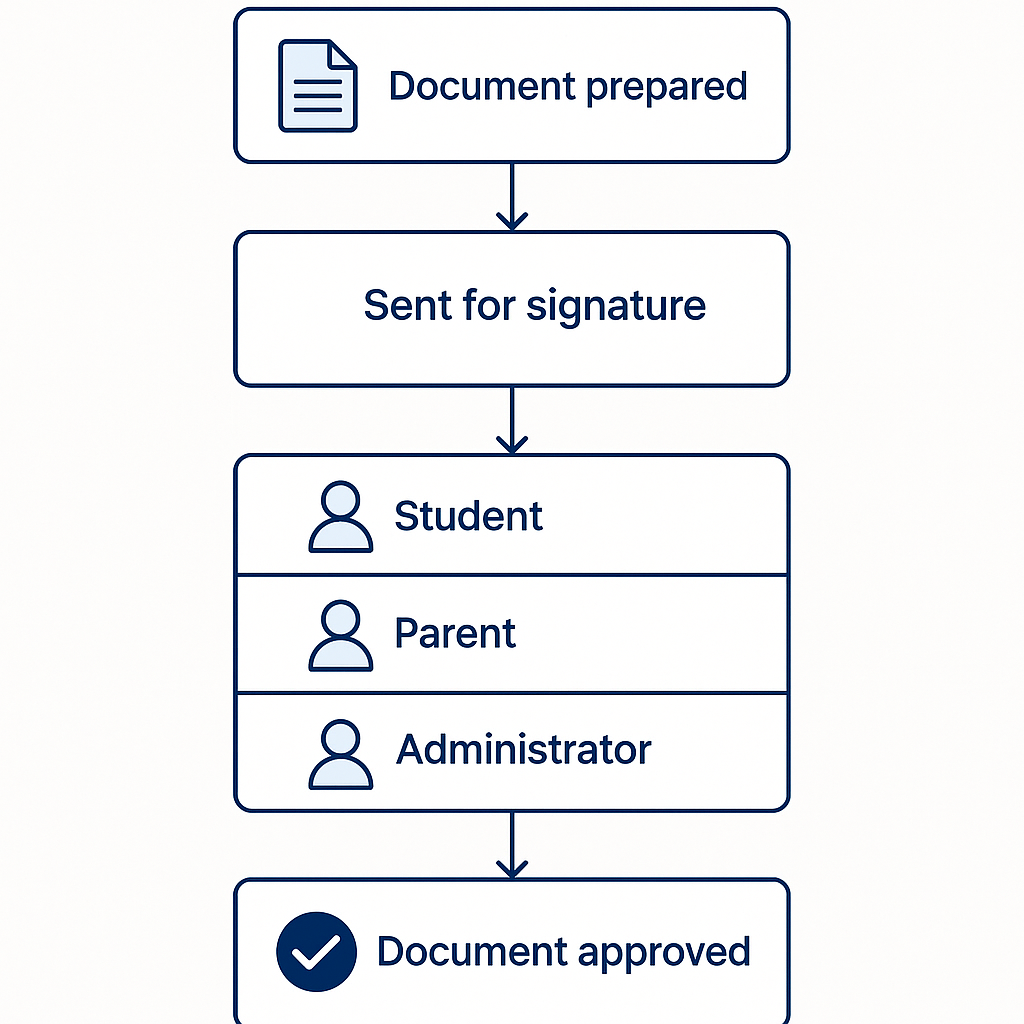
- Customizable workflows: Automate multi-step signing processes, like sending a form to a student, then a parent, and finally to an administrator
- Robust security and audit trails: Ensure every action is logged for a verifiable chain of custody
- Smooth integrations: Look for platforms that can connect with your existing Student Information System (SIS), LMS, or cloud storage
- Legally binding signatures: The solution must provide signatures recognized by law and enforceable across jurisdictions
Use cases for electronic signatures in education
Before diving into specific use cases, here’s a typical e-signature approval flow in education:
EElectronic signatures touch nearly every administrative process. Schools and universities are already seeing the impact across key departments. The table below summarizes common use cases and their benefits:
Why choose Docupilot for electronic signatures?
Docupilot is a simple yet powerful eSignature platform designed for education. It combines ease of use with enterprise-grade compliance.
Here’s why hundreds of institutions trust Docupilot:
- Tailored for education: Intuitive setup and templates built for academic workflows
- Seamless setup: No complex installation or training required
- Dynamic lists: Manage repetitive list-based document entries effortlessly
- Connected experience: Integrates with major education tools through Zapier and Make, automating document generation and signing in one go
- End-to-end automation: Customize and automate workflows using dynamic document logic and reusable content components
- Transparent Pricing: Scalable plans suitable for schools, universities, and education groups
- 24/7 customer support: Ensures smooth implementation
Stop drowning in paper: Use eSignature tool
Educational institutions have spent decades improving how they teach. Now, they’re reimagining how they operate. It's time to change. An electronic signature for education is a vital digital upgrade recognized by global E-signature laws.
By choosing a trusted solution like Docupilot, your institution can eliminate paperwork bottlenecks, empower staff collaboration, and deliver a seamless digital experience for students and faculty alike.
Join hundreds of educational institutions that have optimized their operations with Docupilot. Try it free or schedule a quick demo to see it in action.
Need to verify a signature?
Free Electronic Signature Verification Tool
Instantly verify the authenticity of electronic signatures on your documents. 100% free — no sign-up required.

FAQs
What are the security features of electronic signatures in education?
How do electronic signatures enhance administrative efficiency in schools?
They eliminate manual steps like printing and scanning, reducing turnaround times and human errors.
Can electronic signatures be used for student consent forms?
What is the difference between an electronic signature and a digital signature?
How do I implement electronic signatures in my institution?
Learn how to automate document creation with Docupilot


Contents
Stop rebuilding the same document by hand.

Generate and sign documents in one workflow
Save ~15 minutes per application